
The Best Studio Headphones for Mixing, Recording and Music Production (2026)
If you were to ask me what the best studio headphones are in 2026, I would say… It depends! A good pair of studio headphones is one that lets you hear the details that ordinary listening headphones tend to flatter, soften or hype up. They can also give you a reliable place to work on music when your room is not treated, or when the neighbours are asleep. If you’ve ever finished a mix in your headphones and then played it in the car and wondered where half the bass went, then you’ll know that a decent pair of studio headphones is meant to help you avoid that exact problem.
This guide covers DJ City’s top studio headphones for mixing and mastering, monitoring, recording and music production in 2026, including a genuinely affordable budget option for a first home studio. I’ll also clear up the open-back versus closed-back question, because that’s a key aspect of the decision process.
Quick answer: The Sennheiser HD 490 PRO is our overall pick for serious mixing and production. Its open-back design gives you a spacious, revealing view of a mix, while the two supplied pad sets make it unusually adaptable. If you are recording vocals or instruments, choose a closed-back pair instead. The Sennheiser HD 280 PRO is our tracking pick, and the AKG K52 is the place to start if your budget is tight.
Disclosure: DJ City sells the headphones featured in this guide. Our recommendations are based on documented specifications, current product availability and suitability for each stated use case. Prices and stock can change, so check the linked product page for the latest information.
Our top studio headphones at a glance
Mixing usually points you towards an open-back model. Recording near a live microphone calls for closed-back models with useful isolation. If you need one pair to handle a bit of everything, start in the middle of the table.
Swipe sideways to compare all columns.
| Model | Our pick for | Design | Impedance | Weight | Worth knowing |
|---|---|---|---|---|---|
|
Best overall for mixing | Open-back | 130 ohms | 260g | Sound leaks in and out, so it is made for quiet spaces rather than tracking |
|
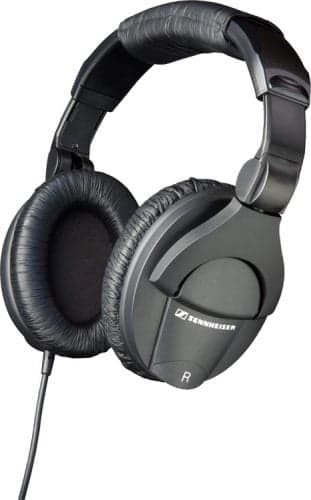
Recording and tracking | Closed-back | 64 ohms | 220g | Strong isolation, with a firmer fit than some listeners prefer |
|
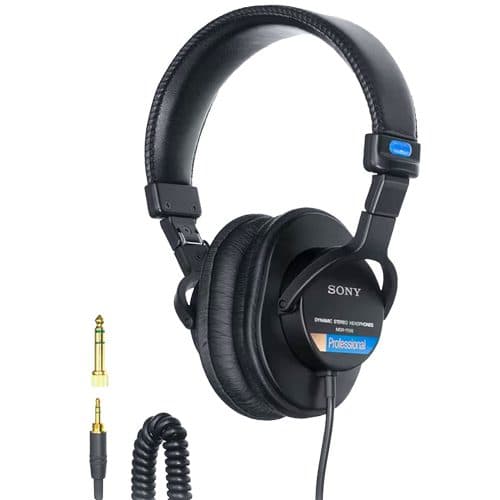
Best value studio workhorse | Closed-back | 24 ohms | Approx. 230g | Its revealing upper mids can feel bright on some material |
|
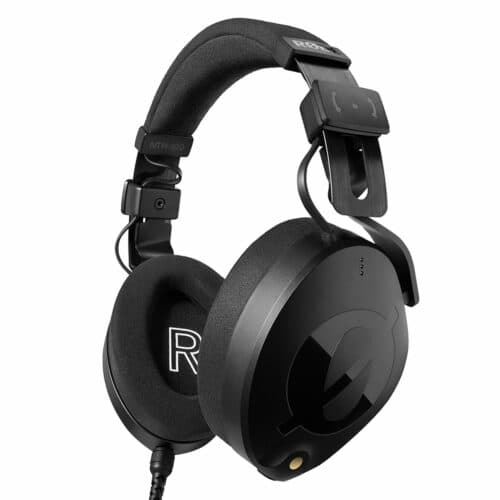
Best for music production and long sessions | Closed-back | 32 ohms | 350g | Heavier than the other closed-back options here |
|
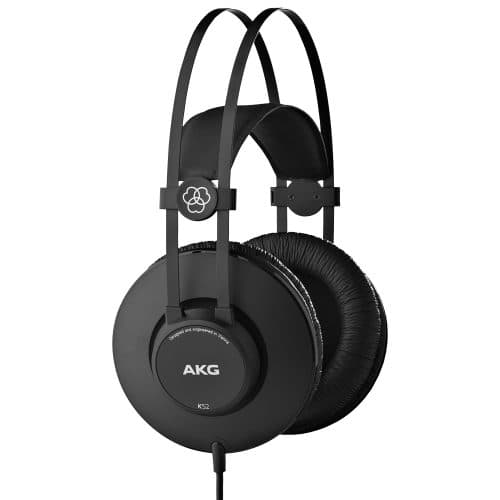
Best budget studio headphones | Closed-back | 32 ohms | 200g | A sensible starter pair, though less resolving than the pricier picks |
The best studio headphones in 2026
These are the five best studio headphones that cover different use cases encountered by most home producers, musicians, engineers and content creators. Keep in mind there is no single winner for every studio job, and the pair I would choose for a late-night mix is different from a pair recommended to a vocalist using a condenser microphone.
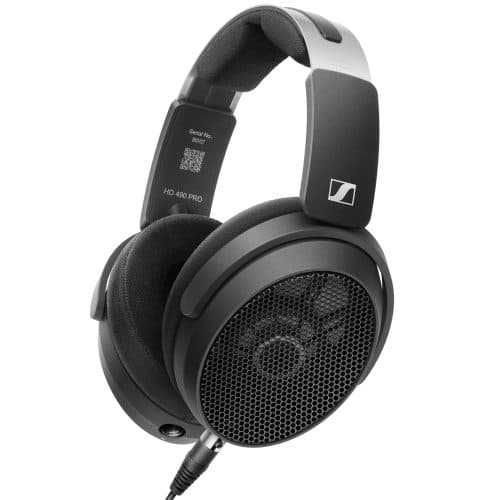
Best mixing headphones: Sennheiser HD 490 PRO
 If mixing is the main job, the HD 490 PRO is the standout choice here. Its open cups create a wide soundstage that helps with placing instruments, hearing reverb tails and untangling busy arrangements.
Sennheiser includes two sets of washable pads, one for producing and one for mixing. Each changes the acoustic presentation and gives you another perspective on the same track. The 260g build also suits sessions that turn from “one quick tweak” into the rest of your evening.
- Open-back design with a wide, dimensional soundstage
- Two supplied pad sets for producing and mixing
- Detachable cable can connect to either earcup
- 130-ohm impedance suits a capable audio interface or headphone amp
Keep in mind: Everyone else in the room will hear your playback, and you will hear the room. These are for mixing in a quiet space, not recording beside a hot microphone.
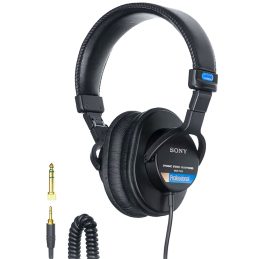
Best for recording and tracking: Sennheiser HD 280 PRO
 A singer needs to hear the track and ensure no clicks or artefacts are spilling back into the microphone, and that is where the HD 280 PRO excels. Its closed cups and up to 32dB of documented attenuation make it our strongest tracking choice.
The cups rotate and fold, the coiled cable gives you room to move, and the 64-ohm impedance is manageable for many audio interfaces. The fit is reasonably firm, which helps the isolation but may take some getting used to.
- Closed-back design suited to vocal and instrument recording
- Up to 32dB of passive attenuation
- Folding, rotating earcups for storage and one-ear checks
- Replaceable ear pads and headband padding
Keep in mind: You can mix on the HD 280 PRO, especially once you learn it, but most people would agree that isolation is its true superpower. For those moments where you’re trying to judge depth and stereo space, an open-back pair has the clear advantage here.
Best value studio headphones: Sony MDR-7506
 The MDR-7506 has been hanging around studios, broadcast rooms and location bags for years, and that’s because it’s extremely practical and reliable. It folds down, is easy to transport, and exposes vocal edits, hiss and clicks, making it our pick for an all-around studio workhorse.
That forward character is handy when you are recording, editing or checking a mix. It can also feel bright, so learn the headphones before making dramatic EQ moves on cymbals and vocals.
- Closed-back design for monitoring, editing and tracking
- 40mm drivers with a 10Hz to 20kHz stated response
- Low 24-ohm impedance for easy pairing with common studio gear
- Folding construction and supplied carry pouch
Keep in mind: The cable is fixed rather than detachable. If your gear gets thrown into bags every weekend, treat that cable with a bit of respect.
Best headphones for music production + long sessions: RØDE NTH-100
 The NTH-100 is our pick for those who move between producing, recording, editing a podcast, and another round of vocal takes in a single day. It combines useful isolation with a design built around longer sessions.
The Alcantara cushions use RØDE’s CoolTech gel to manage heat, while the FitLok headband locks in your preferred size. The cable plugs into either earcup, which is a brilliant little option for when your interface is on the “wrong” side of your desk!
- Closed-back design with 20dBA of stated ambient attenuation
- 40mm drivers and a 5Hz to 35kHz stated response
- 32-ohm impedance works with most audio interfaces and portable setups
- Replaceable cushions and detachable left-or-right cable connection
Keep in mind: At 350g, it is the heaviest pair in this guide. Comfort is personal, so glasses, head shape and preferred clamping force still matter.
Best budget studio headphones: AKG K52
 Starting a home studio already means paying for an interface, microphone, stand, cables and three other things you probably forgot about. The K52 keeps the headphone part at a fairly reasonable price: It is a light, closed-back over-ear model that can cover first recordings, beat-making, practice and everyday monitoring without burning through the rest of your budget.
The self-adjusting headband is super convenient. Couple that with a decent 2.5m cable and 32-ohm impedance (which suits common interfaces), and you’ve got yourself a good bargain. Just know that it won’t have the same mixing depth as the HD 490 PRO, but that would be a fairly unreasonable expectation at this price range anyway.
- Affordable closed-back design for recording and home production
- Light 200g build with self-adjusting headband
- 40mm drivers and an 18Hz to 20kHz stated response
- Low 32-ohm impedance for easy everyday use
Keep in mind: Use references you know well and check important mixes on other systems. This habit applies to every headphone, but it’s super crucial even with an entry-level pair.
Open-back versus closed-back headphones: which do you need?
Open-back and closed-back headphones behave differently because the rear of the driver is either exposed to your room or sealed inside the earcup. Before you start comparing tiny differences in frequency response, start by filtering your options according to this structural feature.
Choose open-back headphones for mixing in a quiet room
Open-back headphones usually give you a wider, more natural sense of space. The sound feels less trapped inside your head, which can make panning, ambience and reverb easier to judge. Air can also move through the cups, so they may feel cooler during a long session.
The only thing to watch out for is leakage: Your music travels out, and room noise travels in. So if you put them on a vocalist near a microphone, the click track may end up on the recording. Alternatively, if you use them on a train or in public, everyone around you gets an unsolicited preview of your project!
Choose closed-back headphones for recording and shared spaces
Closed-back headphones are good for sound isolation and keep any unwanted playback from bleeding into the microphone’s recording. That makes them great for tracking vocals, guitars, drums, podcasts and voice-overs. They’re also better when you live in a noisy home with pets or construction, and they’re good for producers who are constantly travelling.
Because the rear of the driver is enclosed, the stereo image can feel narrower, and bass resonances can be harder to manage. Good closed-back headphones can still produce a strong mix. You simply need to learn how that pair presents low end and space.
If you can eventually own two pairs: use closed-backs while recording and open-backs for your main mix decisions. They solve different problems and make a useful cross-check for each other.
How do you choose the right studio headphones?
Start with the job
For vocal tracking, isolation comes first. For mixing and mastering in a quiet room, soundstage and detail move to the top of the list. If you produce, edit, record and listen on the same pair, a comfortable closed-back all-rounder such as the NTH-100 or MDR-7506 is often the most practical first purchase.
Do not ignore comfort
A technically excellent headphone is not much use if the headband gives you a headache after forty minutes. Weight, clamping force, pad material, earcup depth and heat all play a part. People who wear glasses should pay extra attention to how the pads seal around the arms, as that can affect comfort and bass response.
Check impedance and what will drive the headphones
Impedance is measured in ohms. Lower-impedance models are generally easier to run from laptops, portable recorders and modest audio interfaces. Higher-impedance headphones may need a stronger output or dedicated amplifier.
Check your interface before buying. The 32-ohm K52 and NTH-100 are easy matches for many setups. A 130-ohm model such as the HD 490 PRO deserves a capable source.
Treat frequency response numbers as context
A wider stated range does not guarantee better accuracy. Human hearing is commonly described as roughly 20Hz to 20kHz, and the shape of the response matters far more than a dramatic number printed on a box.
Think about the boring stuff too
Detachable cables, replaceable pads and sturdy hinges are hardly glamorous, but studio gear gets used. Also check the cable length and whether the box includes the adaptor your interface needs.
Can you mix professionally on headphones?
Yes, you can make professional mixes on headphones. Plenty of music is produced in bedrooms, hotel rooms and shared homes where a properly treated monitor setup is not realistic. Headphones also remove the immediate influence of your room, which is helpful when that room has bare walls, a corner desk and a bass problem the size of a small ute.
Headphones do have blind spots. Stereo width can feel more dramatic than it does through speakers, while sub-bass is harder to judge because you do not feel it through your body and the room. Translation checks are still part of the job.
- Keep the listening level sensible and take breaks before your ears get tired.
- Use two or three reference tracks you know extremely well.
- Check the mix in mono for phase and balance problems.
- Listen on another pair of headphones, everyday speakers and the car when you can.
- If possible, make your final low-end and stereo decisions on more than one playback system.
If you have the room and budget, a pair of budget studio monitors makes a great partner for your headphones. The point is not to find one magical playback system. It is to understand how your work translates between several of them.
What is the difference between studio headphones and DJ headphones?
Studio headphones are generally built for detail, repeatable monitoring and longer production sessions. Recording models focus on isolation, while mixing models aim to expose balance, space and problems you need to fix.
DJ headphones need strong isolation in a loud booth, punchy cueing, swivelling or flexible earcups, a secure fit and a build that can handle regular travel. A DJ-friendly sound may push the lows and highs forward so you can find the beat through a club system.
There is overlap. The MDR-7506 can cue a set, and many DJ headphones can record a vocal demo. But if accurate production decisions are the priority, start with studio headphones. If club monitoring and one-ear cueing come first, buy for the booth.
How I’ve chosen these studio headphones
I’ve built this shortlist around distinct studio jobs rather than filling ten spots with near-identical models. I compared current DJ City availability, manufacturer specifications, established professional use, design, impedance, weight, isolation, serviceable parts and value at each level. Comfort and tonal balance are a personal thing, so I’ve provided explanations for the trade-offs where needed.
Frequently asked questions
What are the best studio headphones for mixing?
Our overall pick is the Sennheiser HD 490 PRO. Its open-back design gives you a spacious presentation for judging placement, reverb and stereo width, while the supplied mixing and producing pads offer two useful perspectives. Use it in a quiet room and pair it with a capable audio interface or headphone amp.
What are the best budget studio headphones?
The AKG K52 is our budget pick for a first home studio. It is a light, closed-back model with 32-ohm impedance, so it is easy to use with common interfaces. Its isolation also makes it more useful for recording than an open-back headphone at a similar price.
Are open-back or closed-back headphones better for mixing?
Open-back headphones are usually the better choice for mixing in a quiet space because they can present stereo width and ambience more naturally. Closed-back headphones are better for recording, noisy rooms and shared spaces because they reduce external noise and playback leakage.
Can you record vocals with open-back headphones?
We don’t recommend it. Sound escaping through the open cups may be picked up by the vocal microphone. A closed-back pair such as the Sennheiser HD 280 PRO isolates the performer’s vocals and helps keep the backing track out of the recording.
Do studio headphones need a headphone amp?
Not always. Many low-impedance studio headphones work well from a modern audio interface, mixer or portable recorder. Higher-impedance or less sensitive models may benefit from a stronger headphone output.
Can Bluetooth headphones be used for music production?
They can be used for casual checks, but wired headphones give you a direct, predictable connection while recording and making timing decisions. Bluetooth adds latency, may apply audio compression and can introduce operating-system processing.
Which studio headphones should you buy?
If mixing is your priority and you have a quiet place to work, go for the Sennheiser HD 490 PRO. For tracking vocals and instruments, the isolation of the HD 280 PRO is the one to pick. The Sony MDR-7506 remains a dependable choice given its value, while the RØDE NTH-100 is the all-rounder for producers who spend hours at the desk. Building your first setup for the least possible damage to the wallet? Start with the AKG K52.
Whichever pair you choose, give yourself time to learn it. Use familiar reference tracks, check your mixes elsewhere and resist the urge to chase perfection on day one!
Further reading
Written by Ezra A., Staff Writer, DJ, Music Producer